Policy and certifications
GEB’s sustainability strategy and environmental policy guide the company’s environmental management, aiming to optimize environmental performance, reduce its carbon footprint, ensure compliance with regulations in the countries where it operates, and adhere to international environmental standards. For more details on the policy, please visit the link: GEB Environmental Policy
The commitment to the high-level environmental performance of GEB's operations and projects is embodied in the Environmental Management System (EMS) of each subsidiary.
Subsidiaries with an Environmental Management System certified under ISO 14001
-
ISO14001 GEB y Enlaza.pdf
PDF (437.37 KB)
-
Certificado_ISO14001_TGI_En
PDF (526.17 KB)
-
ISO14001 Cálidda
PDF (12,612.27 KB)
-
ISO14001 Conecta.pdf
PDF (428.64 KB)
-
Certificado_ISO14001_Contugas_ingles
PDF (261.96 KB)
Subsidiaries with Environmental Management Systems aligned with Peruvian policies and in the process of alignment with ISO 14001
-
Internal Audit 2025 - Electrodunas.pdf
PDF (1,545.42 KB)
Environmental programs
GEB and its subsidiaries seek responsible operation through a careful and sustainable use of natural resources. This is achieved through programs for the efficient use of water, energy and integrated waste management.
Licensed projects include environmental impact studies and environmental management plans to manage environmental impacts:

Sustainability programs for customers
Grupo Energía Bogotá is committed to sustainability in its value chain, therefore, promotes initiatives and programs to help its customers address environmental issues.
Sustainable Client Programs 2025 (1)
Download it or check it online
PDF (2.65 MB)
Watch online
Environmental performance
Historical figures on the environmental performance of the Group and its subsidiaries are presented below. It is important to point out that when we refer to “regular consumption” or “regular generation,” we are referring to the generation or consumption of resources resulting from activities inherent to the core of the business, whereas “occasional or project-related” generation or consumption stems primarily from construction activities or occasional events, such as emergencies or contingencies. “Total” encompasses both of the aforementioned categories.
Regular water consumption (m3)
Regular water consumption includes consumption for core business activities, meaning that it does not include water consumption derived from construction projects or emergency events.
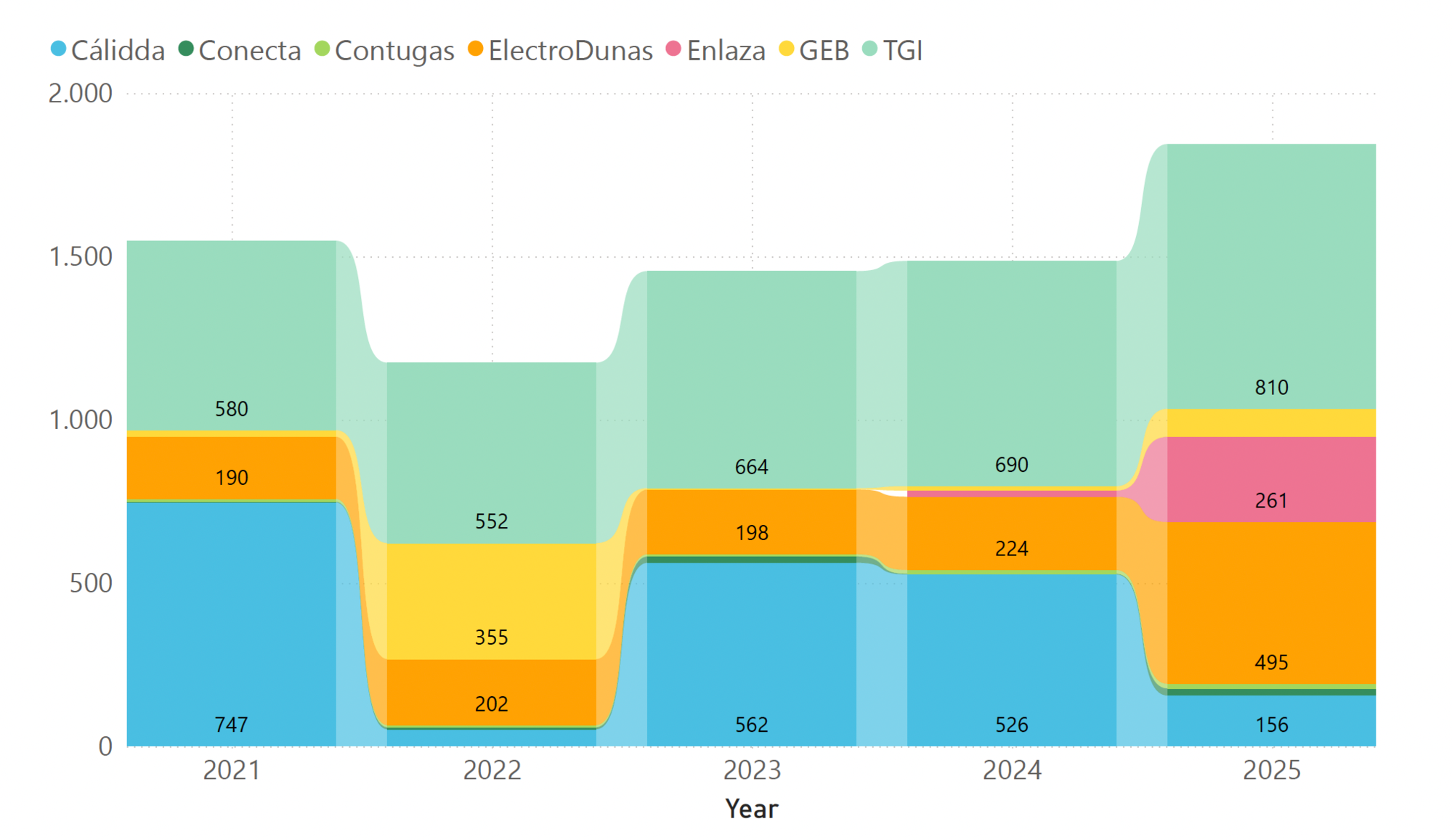
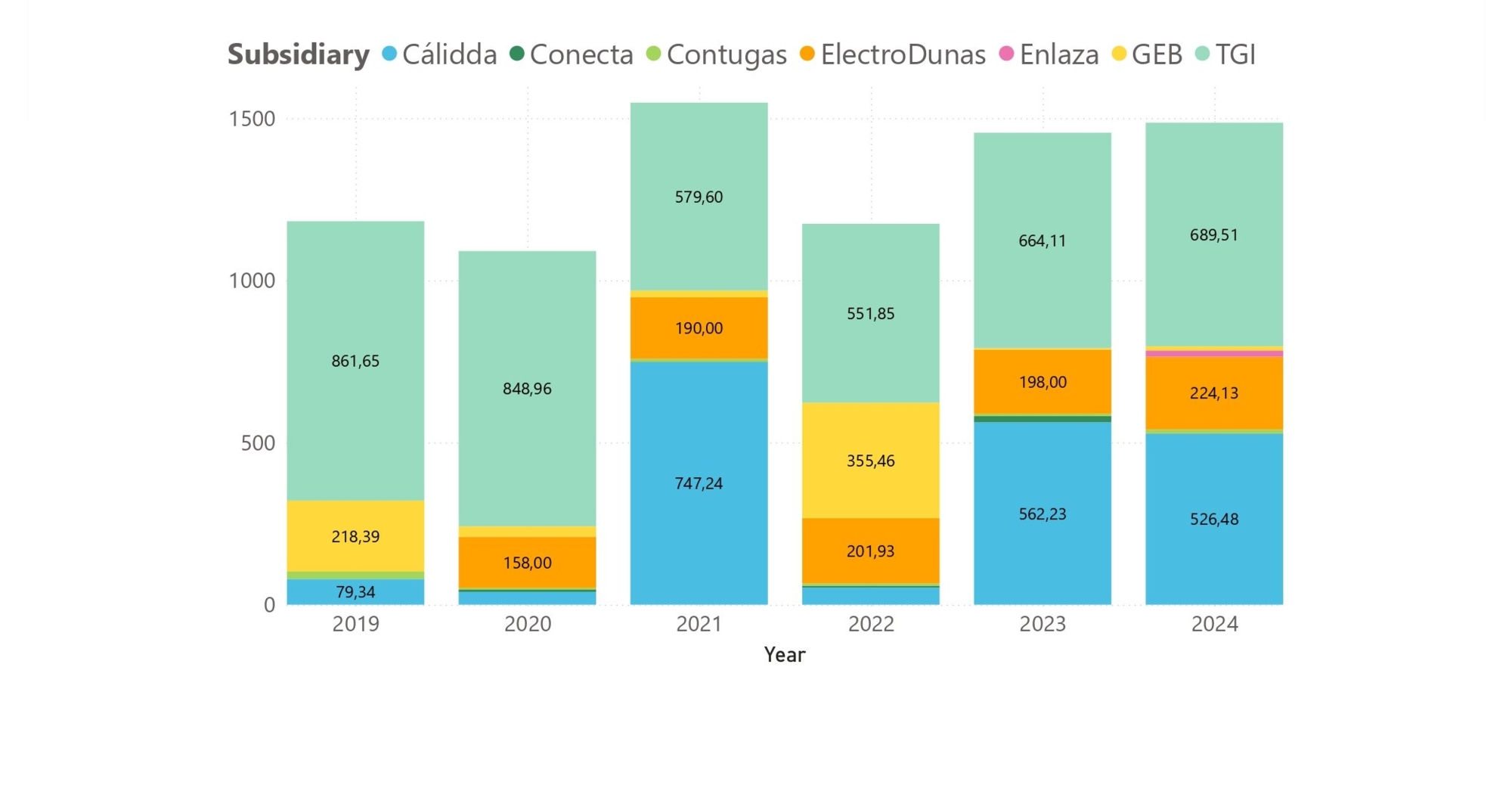
Regular waste generation (Tons)
Regular generation includes waste generation from core business activities, meaning that generation from construction projects or emergency events is not included.
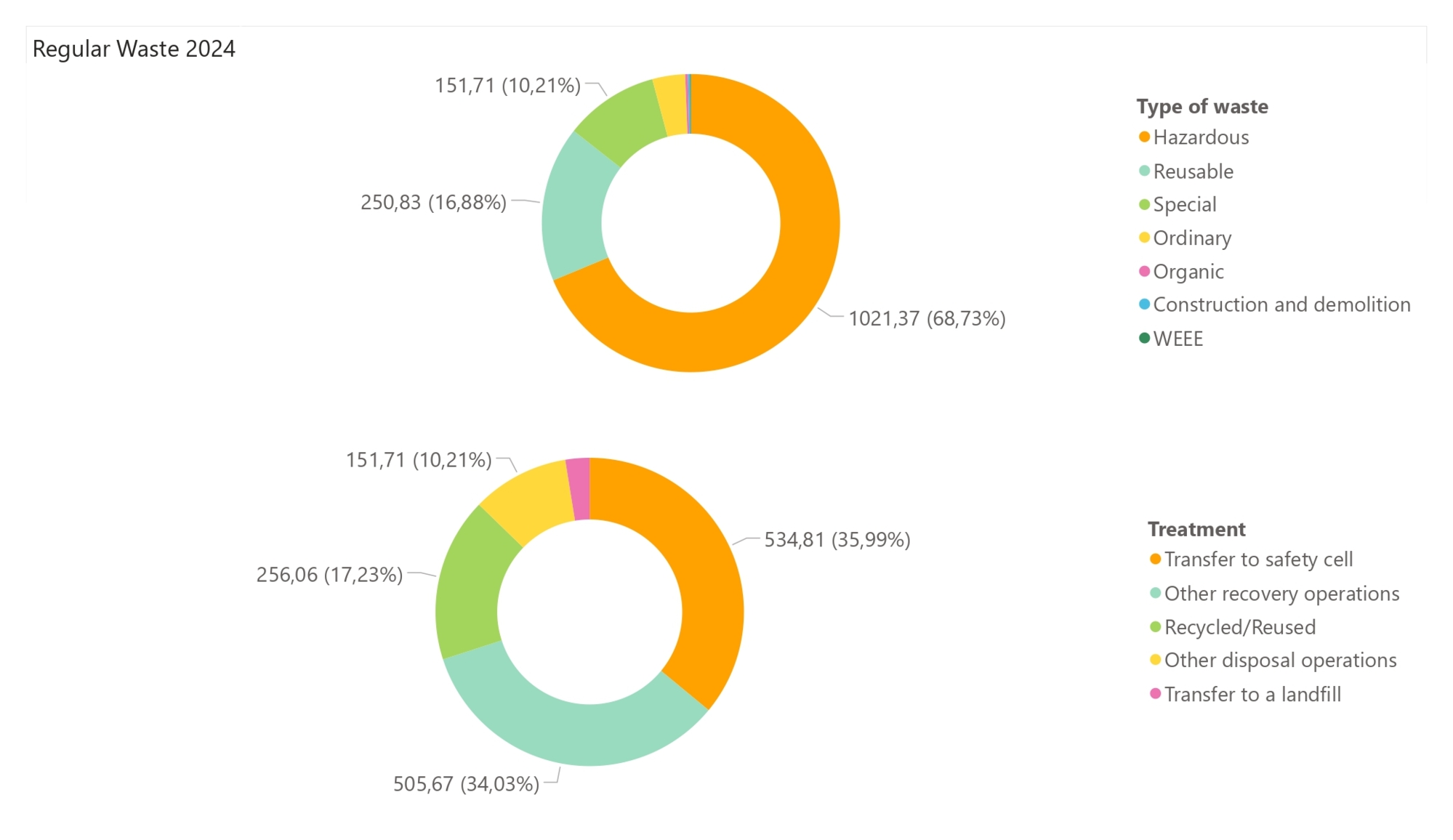
Regular generation of waste by type of final disposal or treatment 2024 (Tons)
Total waste generation (Tons)
Includes waste generated by construction projects and emergency events. It is dependent on construction projects.
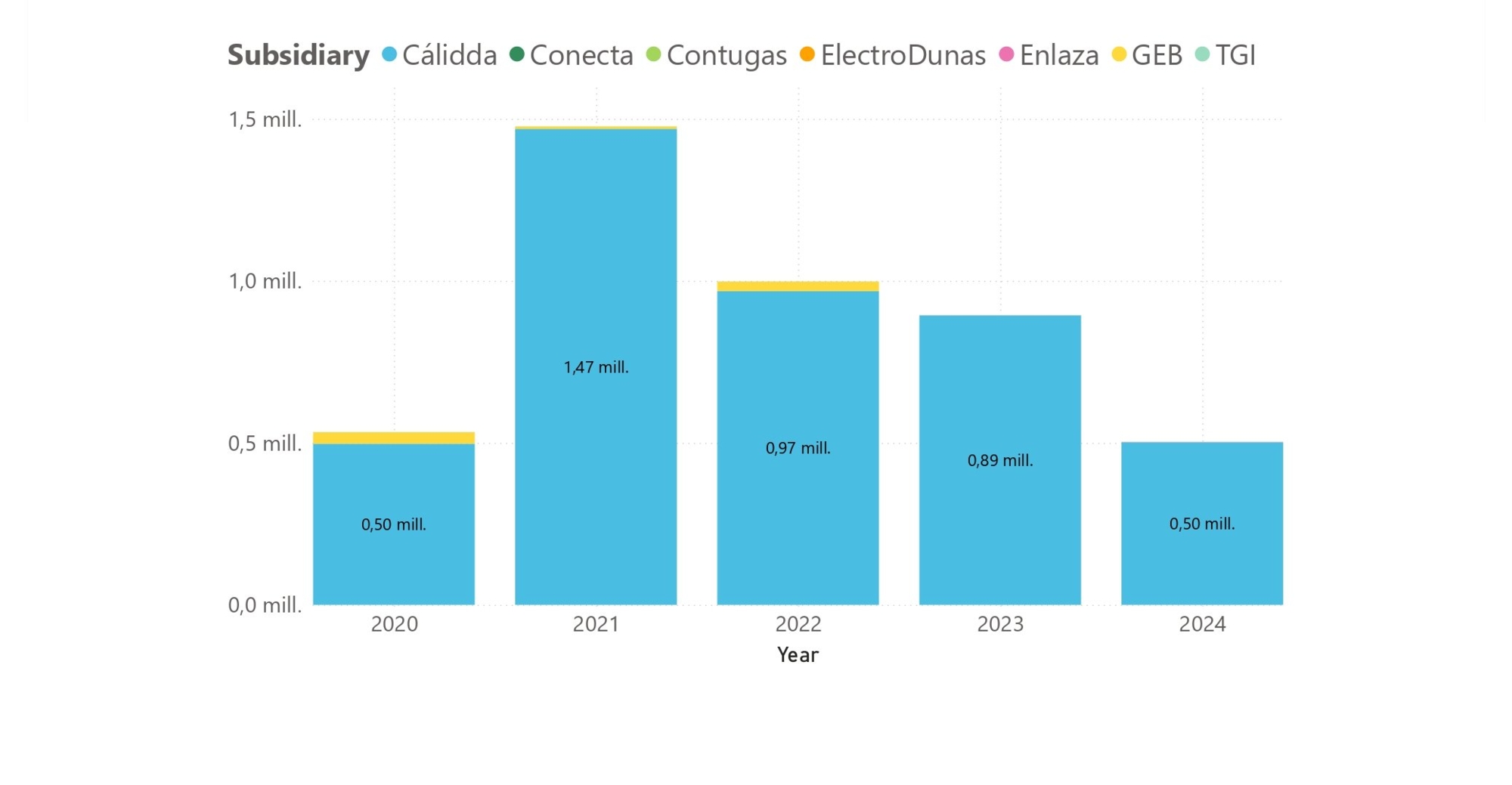
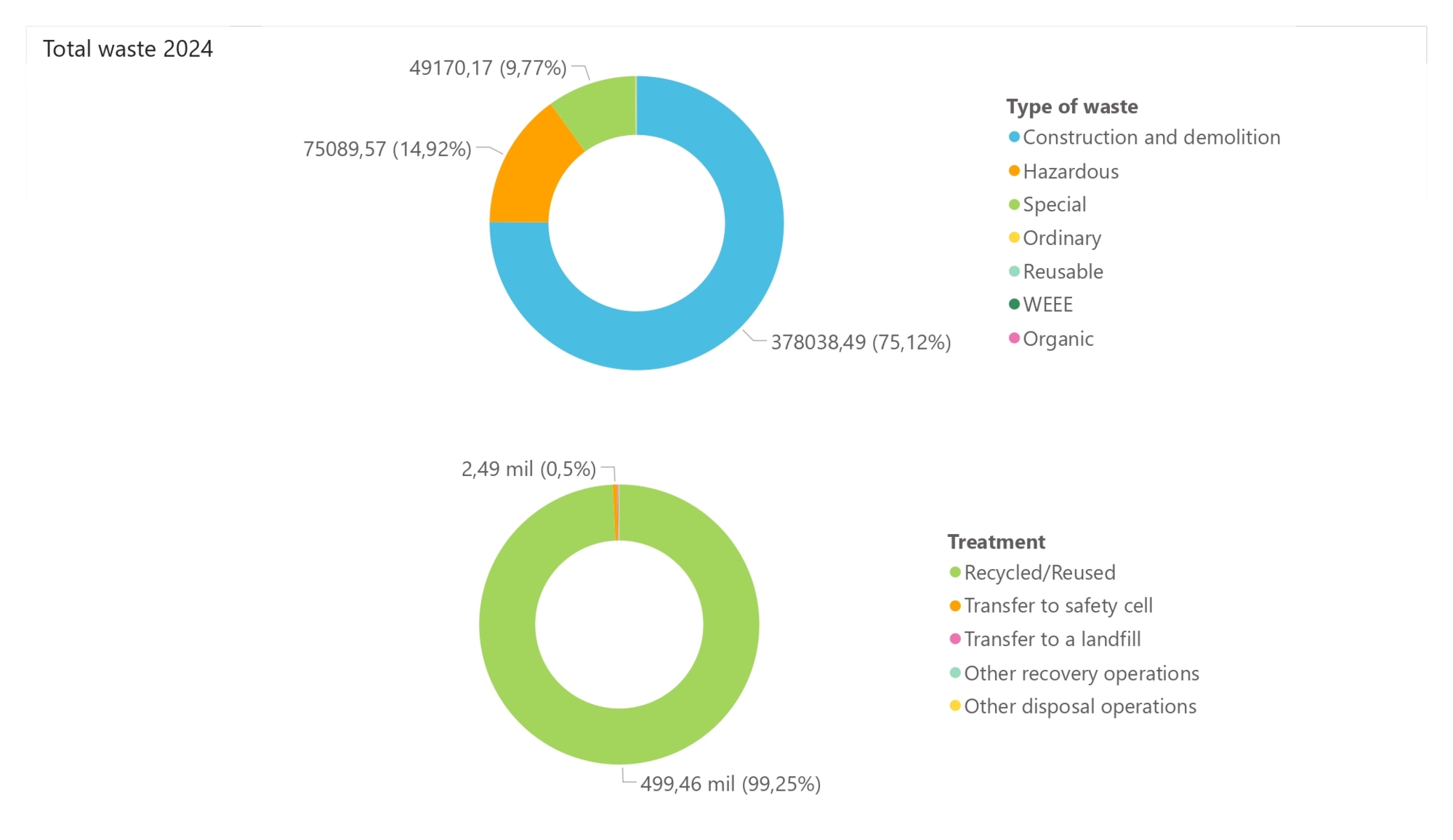
Total waste generation by type of waste by 2024 (Tons)
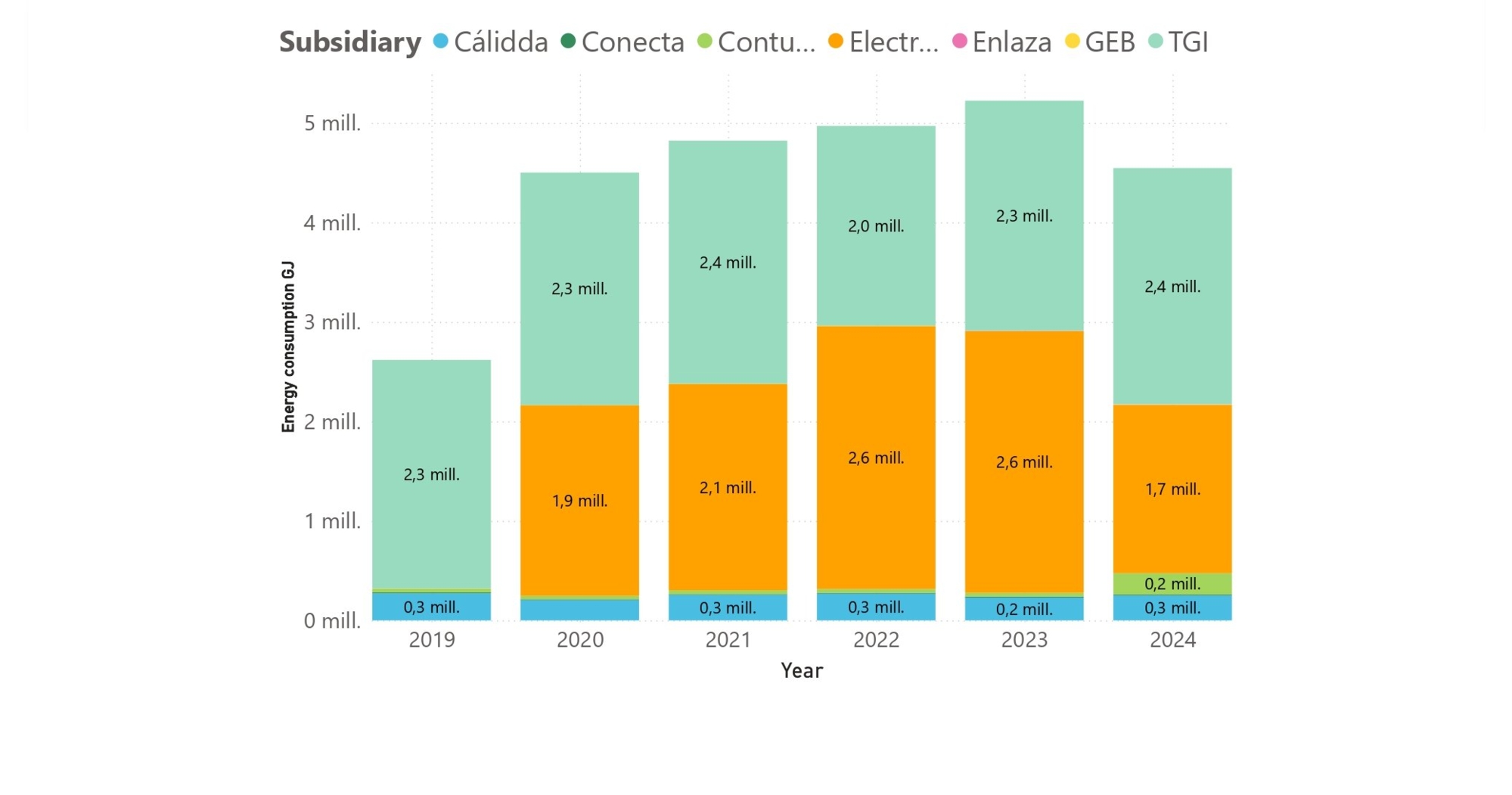
Energy consumption (GJ)
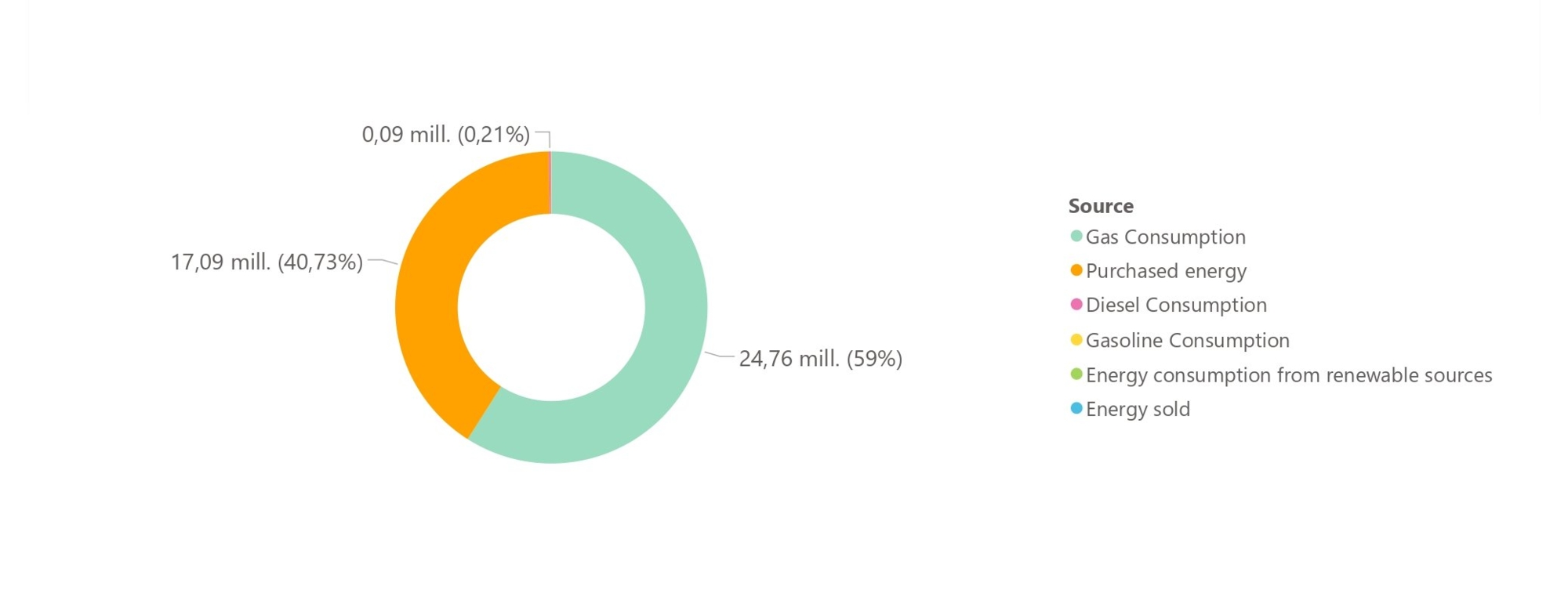
Energy consumption by source for 2024.
Environmental Performance Goals 2025
| Dimension | Units | Target |
| Total non-renewable energy consumption | MWh | 1.284.627,02 |
| Total net fresh water consumption | Million cubic meters | 0,033 |
| Total waste disposed | metric tonnes | 1.534,80 |
| Direct NOx emissions | metric tonnes | 4.248,73 |
Air quality
Grupo Energia Bogota estimates the emission of atmospheric pollutants using methodologies based on EPA (Environmental Protection Agency) literature. In addition to NOx emissions, other pollutants such as carbon monoxide (CO), sulfur dioxide (SO₂), volatile organic compounds (VOC), particulate matter PM10, PM2.5 and condensable particulate matter are estimated.
Additionally, as part of its environmental commitments, TGI performs annual air quality monitoring at its stations. The results obtained have consistently demonstrated compliance with the limits established by Colombian regulations. The results are in Spanish since this is the language in which they are presented to the environmental authority.
-
INF-24-0043-K-07.pdf
PDF (3,062.90 KB)
-
INF-24-0043-K-15.pdf
PDF (2,571.56 KB)
-
INF-24-0043-K-19.pdf
PDF (2,627.68 KB)
-
INF-24-0043-K-21.pdf
PDF (2,279.08 KB)
-
INF-24-0043-K-27.pdf
PDF (2,231.90 KB)
-
INF-24-0043-K-39 (1).pdf
PDF (2,826.66 KB)
-
INF-24-0043-K-42.pdf
PDF (2,748.79 KB)
-
INF-24-0043-K-49.pdf
PDF (2,906.54 KB)
-
INF-24-0043-K-53.pdf
PDF (2,553.97 KB)
-
INF-24-0043-K-62.pdf
PDF (2,587.90 KB)
-
INF-24-0043-K-65.pdf
PDF (2,697.46 KB)
-
INF-24-0043-K-68.pdf
PDF (2,579.94 KB)
-
INF-24-0043-K-70.pdf
PDF (2,663.89 KB)
-
INF-24-0043-K-73.pdf
PDF (2,586.41 KB)
-
INF-24-0043-K-78.pdf
PDF (2,713.02 KB)
Environmental Investments
Environmental investment of GEB and its subsidiaries is divided into two main segments, voluntary and mandatory, which in turn cover different categories. The investment by category for 2024 is presented below.
| Mandatory Investment | Voluntary Investment |
| 48.000 Millones COP | 3.800 Millones COP |
|
|
Subsidiary | Voluntary Investment COP Millones | Mandatory Investment COP Millones |
Enlaza | 597 | 28.260 |
TGI | 1.201 | 16.715 |
Cálidda | 723 | 1.545 |
Contugas | 432 | 725 |
Conecta | 133 | 651 |
Grupo Energía Bogotá | 463 | 0 |
ElectroDunas | 245 | 98 |
Cantalloc | 3 | 0 |
Environmental performance